There are more Carrd alternatives floating around than there are real reasons to leave Carrd, and I know because one slow Tuesday I lined a stack of them up side by side just to see what was actually different. I went looking in the first place because my "portfolio" used to be a Notion doc I had to dig the link out of every time a brand asked, and one time I sent the wrong version. I didn't need a prettier site. I needed one page that did one job. If you're weighing Carrd alternatives for a mobile action page, that's the real split this guide is about: when you want a light page built around a single next step, and when you actually want a site.
Short version: Most Carrd alternatives are still site builders, and Carrd itself is a one-page website builder. If you want a small site you design and tweak, it's good at that. If you want a page that opens straight to one action on a phone, a lighter action page or web card fits better. This walks through which side you're on.
Why people look for Carrd alternatives
Most people don't search for Carrd alternatives because Carrd is bad. They search because they slowly realize they're being asked to build a site when what they wanted was a page that does something. Those feel similar until you're an hour in, fiddling with section spacing on a thing nobody's even clicked yet.
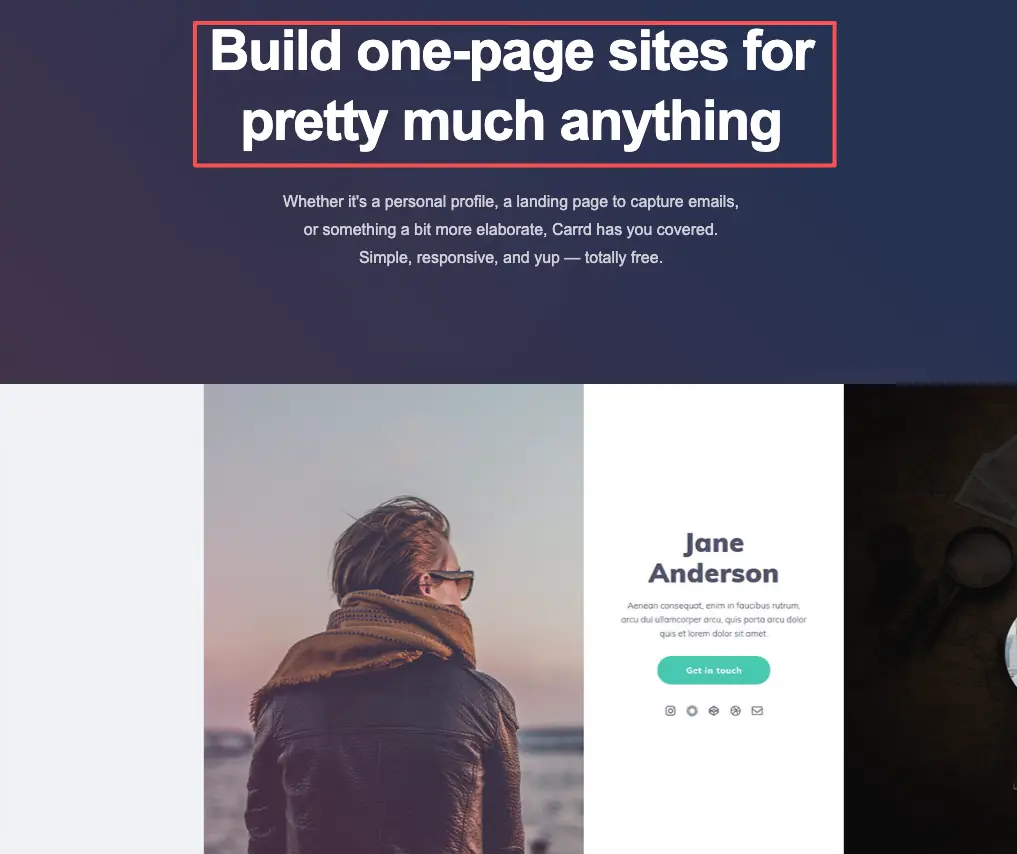
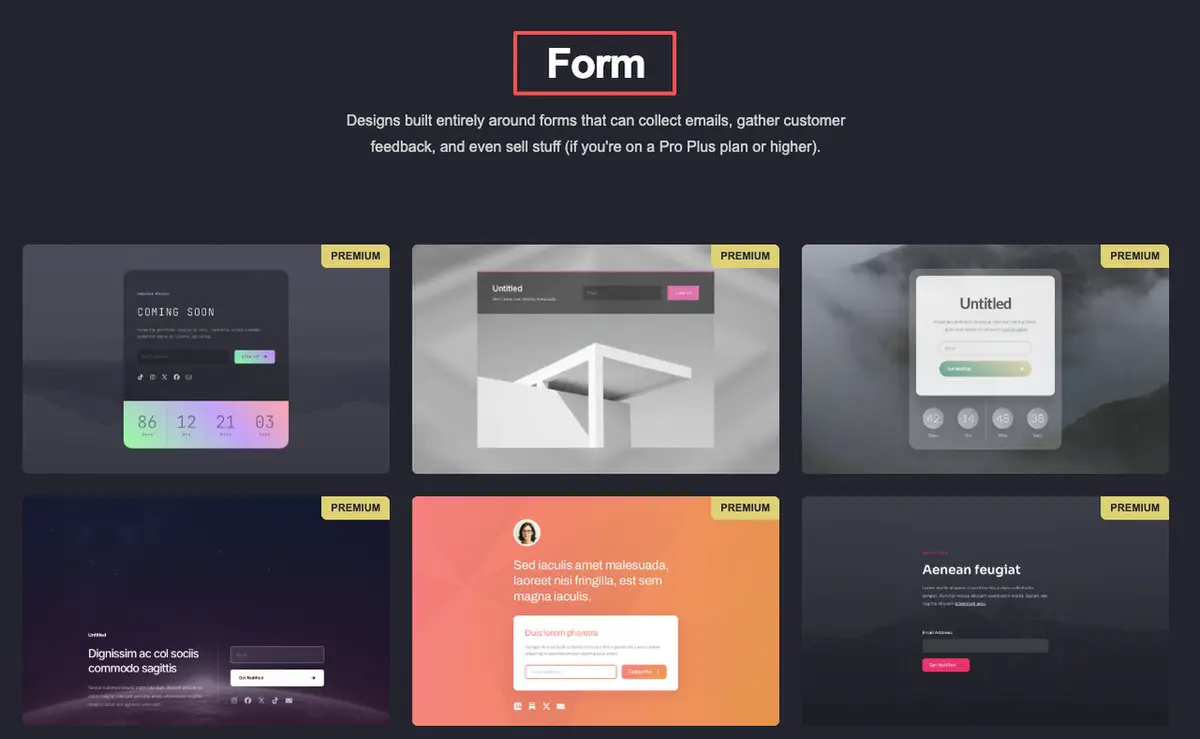
It helps to know what Carrd actually is. It's a no-code builder focused on one-page websites, and the free tier lets you publish a few basic sites on a Carrd subdomain with a small footer mark. The features a lot of people actually want, like contact and signup forms, payment-enabled forms, third-party embeds, and a custom domain, sit on the paid Pro tier. None of that is hidden or sneaky. It's just that if your real goal is "one page where someone can book me or message me," you can end up paying for and learning a website tool to get there.
So the reasons people go hunting usually cluster into a few honest ones:
- They want a real form or booking on the page, not just a row of links.
- They want the page to open straight to one action on a phone, not a scroll.
- They don't want to design and maintain a site, even a one-page one.
- They're not sure they need a "site" at all.
If any of those is you, don't start by collecting tools. Start by writing down the single thing you want a visitor to do. That one sentence decides almost everything below.
Action page vs one-page website
Here's the distinction that took me too long to see. A one-page website, which is what Carrd makes, is still a site. You get a canvas, and you can put anything on it: an about section, a gallery, a few links, a contact block, some animation. An action page is narrower on purpose. It exists to get one thing done, like a booking, an RSVP, an inquiry, or grabbing an offer.
One clear next action vs broader site design
Broader site design is a feature when you genuinely have a lot to say. It's a trap when you don't. If your page has six equally-sized sections, a visitor reads none of them and does nothing, which is the exact problem most people are trying to fix when they go looking for alternatives.
A mobile action page flips the ratio. One job gets the top of the screen and the loudest button. Everything else either supports that job or gets cut. The test I use now is blunt: if I can't say in one sentence what I want someone to do on this page, the page isn't ready, no matter how nice it looks. A one-page site lets you avoid that decision. An action page forces it, which is usually the favor you needed.
Decide which one you're building before you open any editor. Site or single action. That choice, not the tool, is the thing that matters.
Best use cases for a mobile web card
If you landed on "single action," a mobile web card tends to do the job with less overhead than a site builder. A web card is just a focused, shareable mobile landing page you can drop behind one link or one QR code. Here's where it earns its keep.
Bio link, RSVP, booking request, and offer page
Bio link. Social platforms only give you a sliver of clickable space. Instagram spent years letting you add just one link before it expanded to a small handful, which is a big part of why link-in-bio tools and pages exist at all. A web card as your bio destination means one place with one main thing you want people to do, instead of a directory they bounce out of.
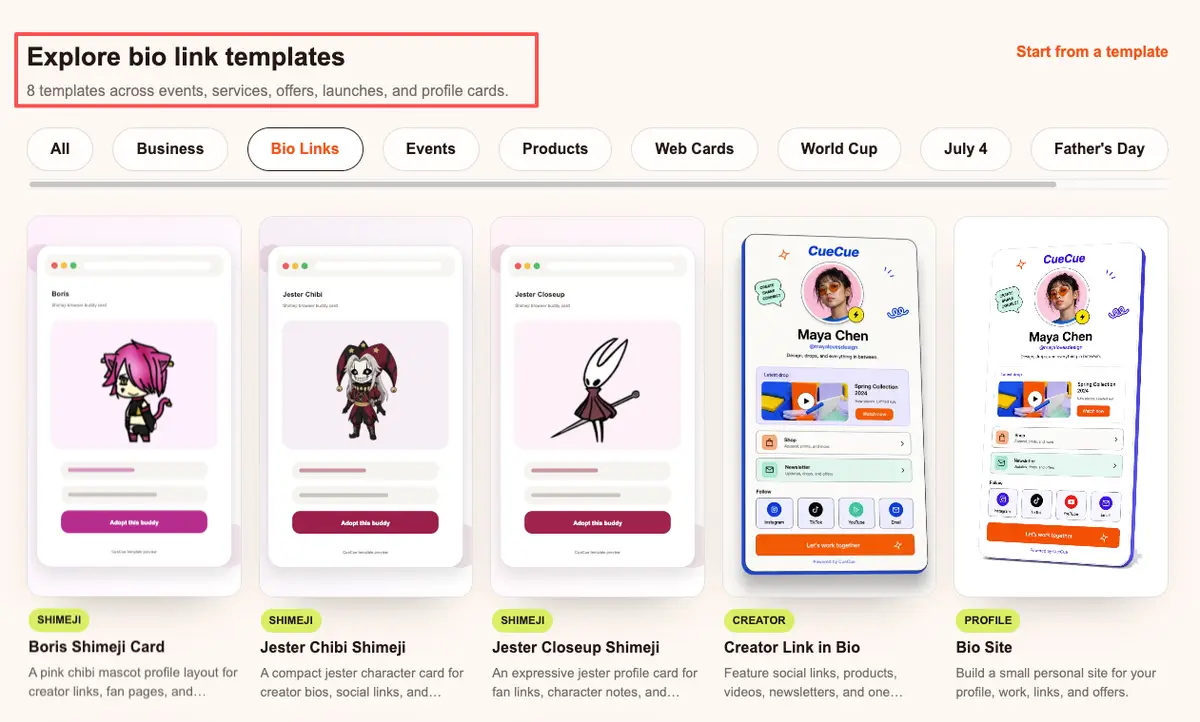
RSVP. For a workshop or a pop-up, a web card sits between an ugly form and heavy event software. People see the date, the place, and a single "save me a spot" action without you answering the same logistics question fifteen times in DMs.
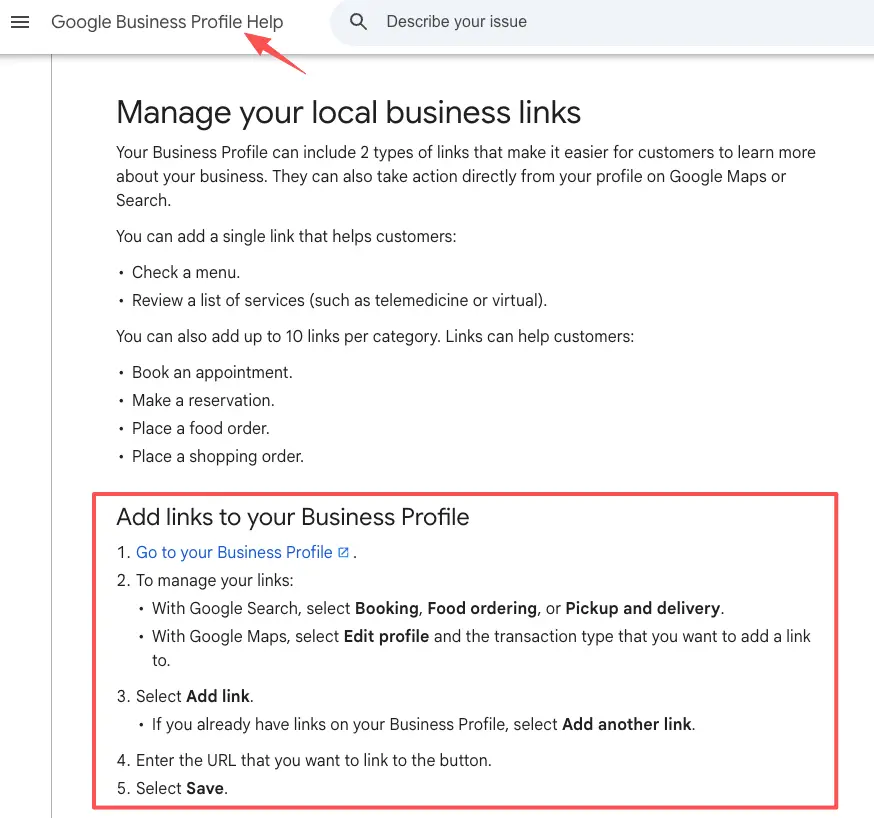
Booking request. If you're local or service-based, the action is usually "ask to book." You can even point your Google Business Profile at it, since Google lets you add booking and appointment links that send people straight to a page where they take that action.
Offer page. One product, one drop, one promo. A card keeps the offer and its call to action on one screen instead of burying it in a multi-page site.
Here's an example you could build, and I'll flag it as an example: a CueCue card with a short intro, three pieces of your work, and one button that says "Work with me," or a tiny inquiry form asking budget, timeline, and platform. CueCue is an action page, not a website builder. It captures the contact or the booking, then hands off to wherever you actually do the back-office work. That boundary is the point. The card is the front door, not the whole house.
Whatever you build, give one action the top of the screen. That's the whole move.
When Carrd or a website builder fits better
Now the honest other side, because pretending one page solves everything is how people end up resenting their tools. Carrd is genuinely good at polished one-page sites, embeds, and light custom design, and a bigger website builder is the right call when you actually need a website.
You want a real site when you need several distinct pages, a blog that grows over time, room to rank for more search terms, a store with many products and proper checkout, or fine-grained custom layouts and animation. None of that is what an action page is for, and trying to force it is just a worse version of using the right tool. In that case, keep your full site. You can still point your Business Profile's website link at whichever page you want people to land on, including a specific campaign or booking page.
So if you need a site, use a site builder. An action page is the answer to a different question, not a smaller version of the same one.
How to choose
You don't actually need a comparison spreadsheet. You need to answer one question first, then match the tool to it.
- Name the one thing you want a visitor to do. Book, RSVP, inquire, buy, follow, grab the offer. Say it in a sentence.
- If you can name it cleanly, you want an action page or web card. Build the page around that one action and cut the rest.
- If you genuinely can't, because you need many pages, a blog, or a store, you want a one-page or multi-page website builder, and that's a fine answer too.
The mistake isn't picking the "wrong" tool. It's picking a tool before you've decided whether you're building a site or a single action. Do that one decision first and the shortlist of Carrd alternatives gets very short, very fast.
You don't need a whole site to look legit
I get why this feels heavier than it is. When your stuff is scattered, the instinct is to go build something bigger and more official, the way I almost talked myself into a real site instead of fixing the actual problem. You don't need that to look credible. No full website needed. You need one page that does one job and opens fast on a phone.So today, do the small thing: write down the single action you want someone to take, then build just that page around it. You already did the hard part by getting people to show up. Give them one clear thing to do when they get there, and you're set.
FAQ
What is a Carrd alternative?
It's any tool you'd reach for instead of Carrd. Some alternatives are also one-page site builders that work much like Carrd. Others are lighter action pages or web cards built around a single next step rather than a small site. Which type fits depends on whether you want to design a site or just get one action done.
How is an action page different from a one-page website?
A one-page website can be about many things at once, with several sections competing for attention. An action page is built around one clear next step and treats everything else as support. Same single URL, very different intent.
When do you still need a website builder?
When you need multiple real pages, a growing blog, a full store, broader search presence, or heavy custom design. Plans, limits, and features on any of these tools change over time, so check each tool's official current documentation before you commit.
Who is a mobile web card best for?
Creators, solo pros, local businesses, and event hosts who need one shareable page focused on a single action, like a bio link, an RSVP, a booking request, or an offer. If your needs are bigger than one action, that's your signal to look at a site builder instead.
About this content
- Written by
- Mia Anderson, UGC Creator · Content Creator
- Reviewed by
- CueCue Team, Editorial review desk
- Last updated
- June 9, 2026
- Editorial standard
- CueCue articles are written for practical use, checked for clear sourcing, and updated when product or policy details change.