For a while my entire "offer" was a rate card I retyped into a clean PDF every time a brand asked for one. One Tuesday I sent a skincare account last quarter's version by accident. Old rates. Old packages. My name spelled the way I stopped spelling it. They were polite about it. I still wanted to crawl under my desk.
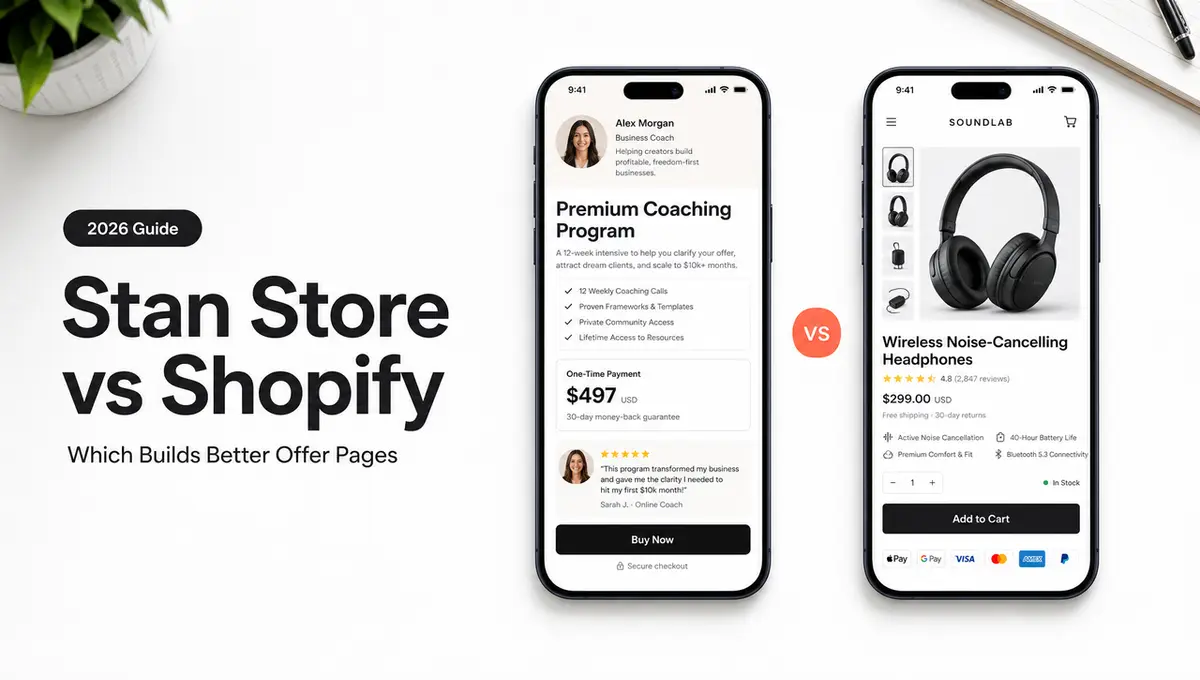
That little disaster is what finally reframed the Stan Store vs Shopify question my DMs keep asking. I'd been treating it like a software pick — which tool wins. It's really about how much machinery your offer needs behind it before money changes hands.
By the end of this you'll know which side of that line your offer sits on, and what to set up first so a "yes" doesn't leak out before checkout.
Stan Store vs Shopify in plain terms
Quick version, because I know you've got something to launch.
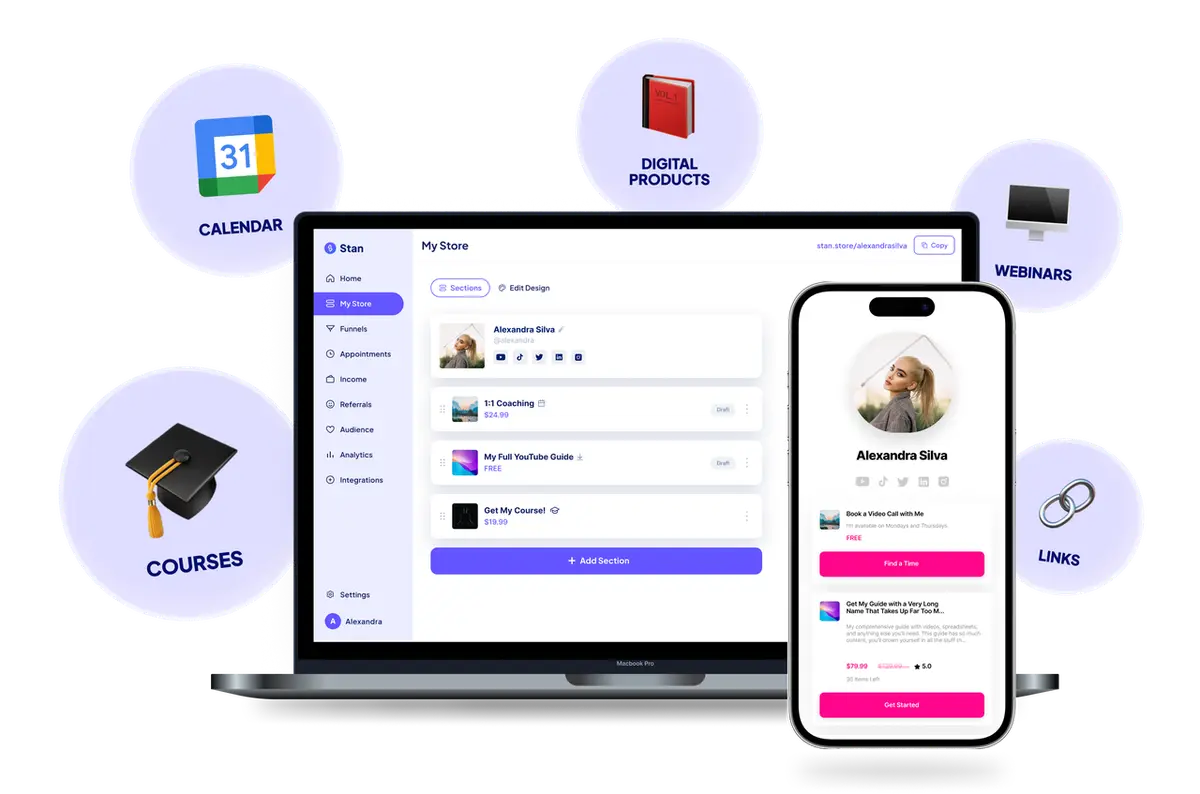
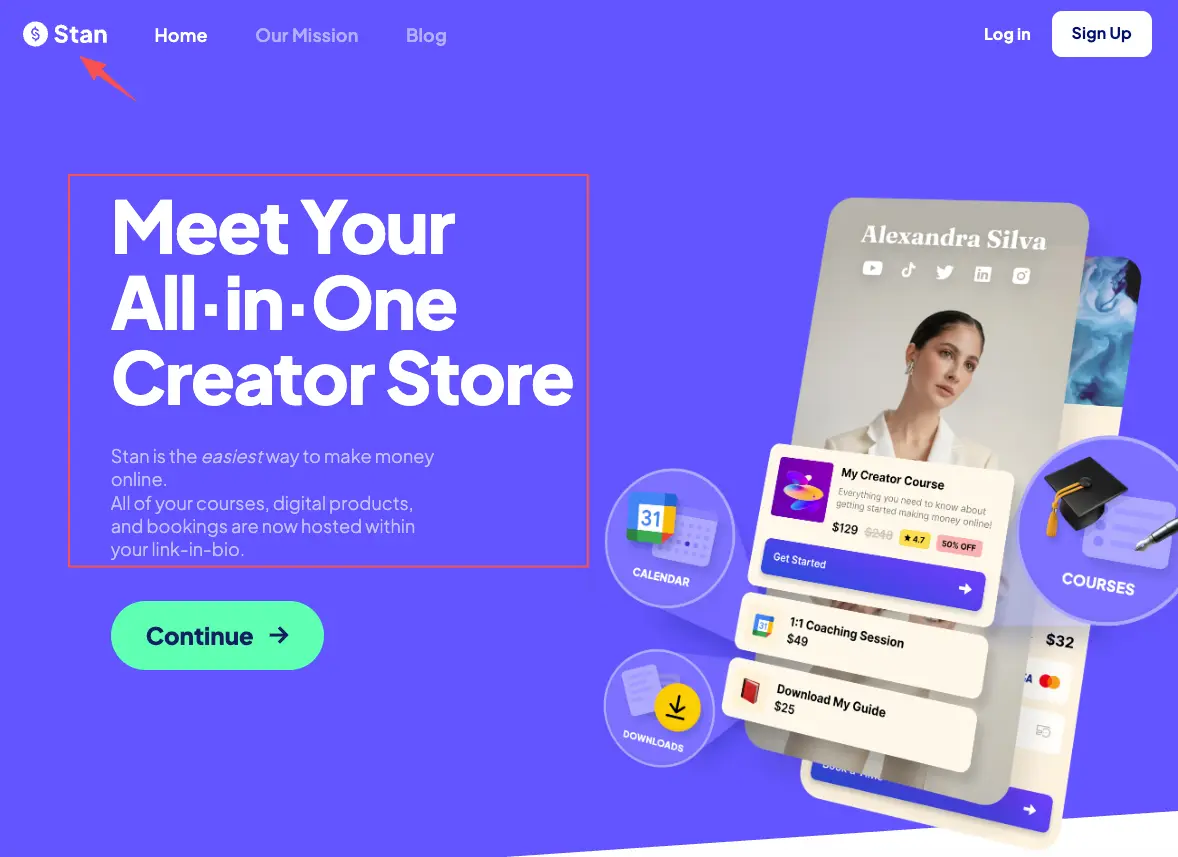
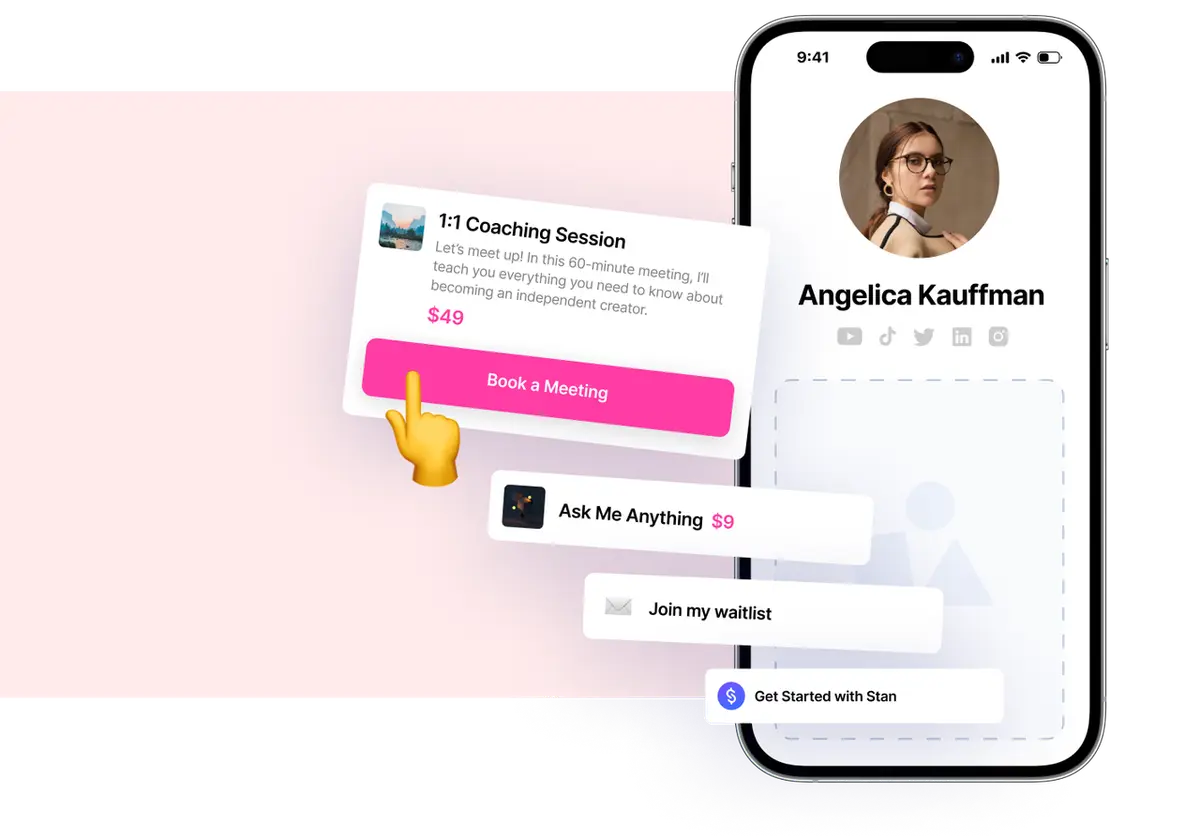
Stan (it dropped "Store" from the name a while back, now it's just Stan) is a link-in-bio storefront. Drop the link in your bio, someone taps, and they hit a checkout that feels like it never left Instagram. What it sells is digital: downloads, courses, memberships, coaching slots, email signups. If you only sell digital, it reads like an ecommerce option with no warehouse attached, the creator store a lot of coaches and template-makers already run straight off their bio.
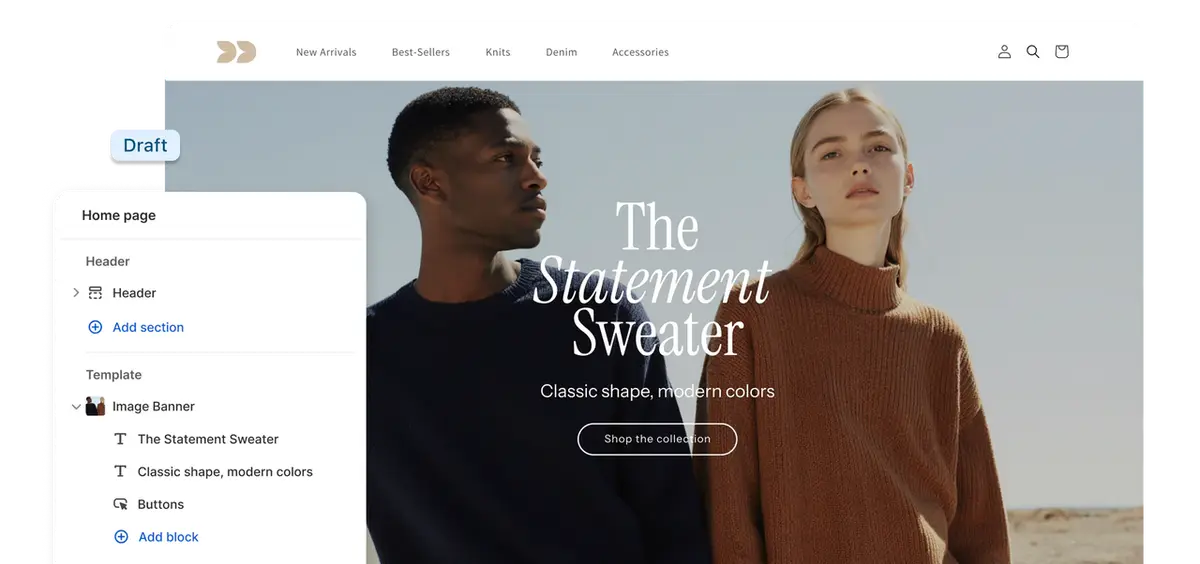
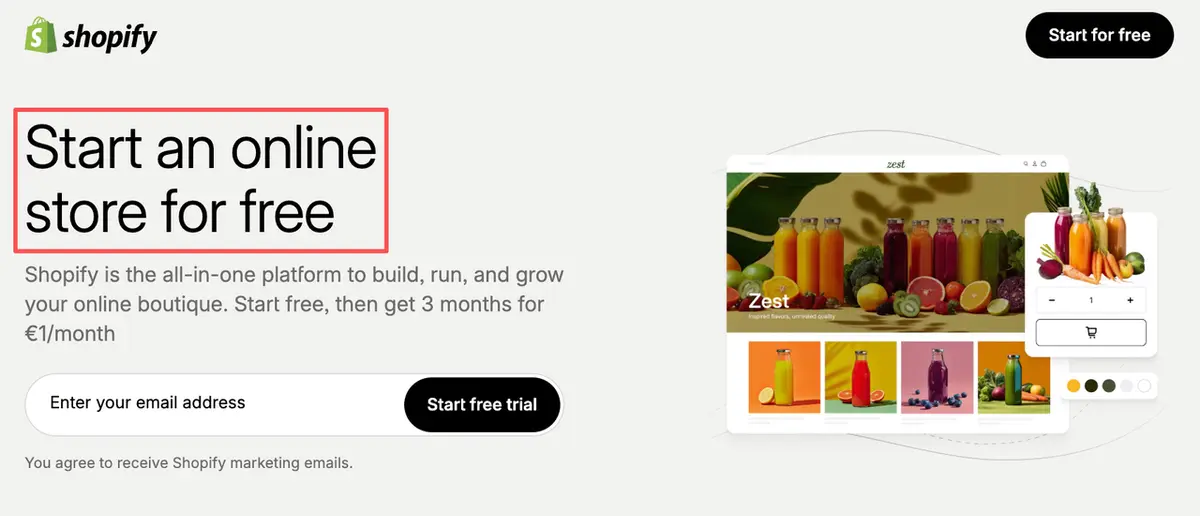
Shopify is a full store. Product catalog, inventory, shipping, taxes, the works. It's a website built to run an actual retail operation, online and in person.
Both take card payments, and both lean on a payment processor that charges its own processing fees on top of whatever the platform costs. Worth knowing before you price anything.
So the plain-terms split: Stan is a fast front-of-house for digital offers. Shopify is the whole restaurant, kitchen and inventory and receipts included. Neither is "better." They're built for different jobs, and your job is the thing that should decide.
Compare by creator selling model
Forget the feature checklists for a second. What actually decides this is your selling model — what you're putting in front of people, and what they have to do to get it.
Small offer, product test, and full store
Three rough buckets. See which one is yours.
A small digital offer. One template, one preset pack, one mini-guide, a single coaching tier. You want someone to see it, get it, and go. No inventory, no shipping, no variants. Stan was built for exactly this, and it won't make you wire up a whole store to do it.
A product test. You're not even sure the thing will sell yet. You want to put up an offer, point a bit of traffic at it, and watch whether anyone bites before you sink a weekend into setup. This is where a lot of us overbuild. You do not need a catalog to test demand for one item.
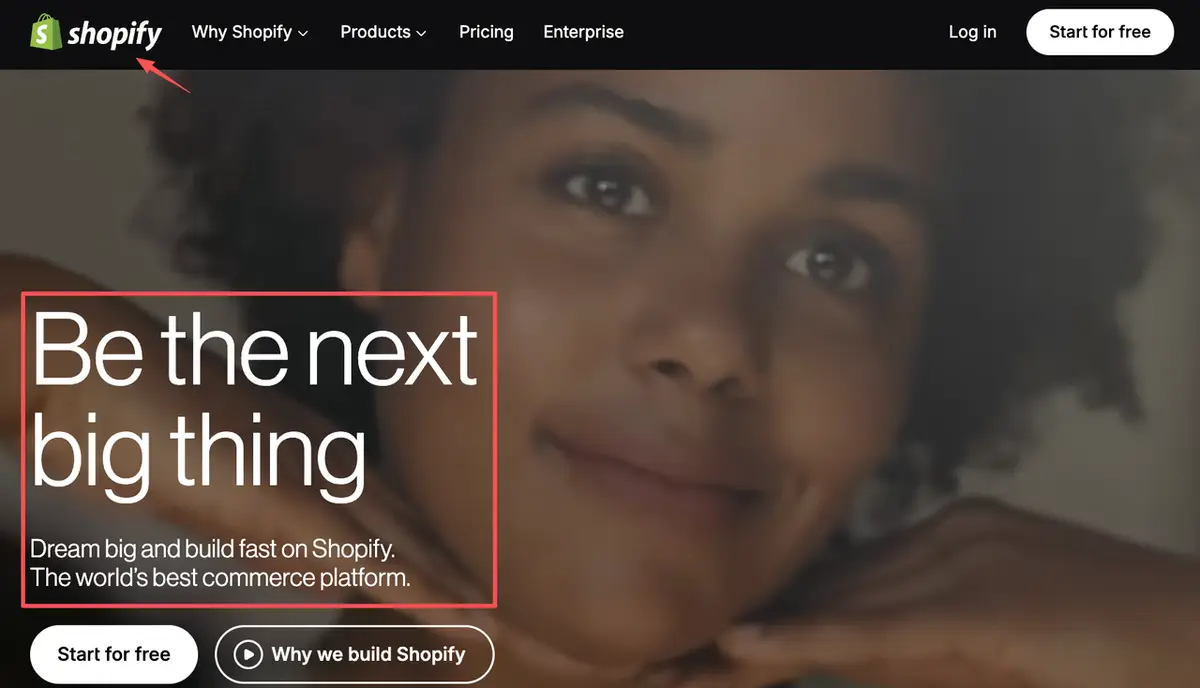
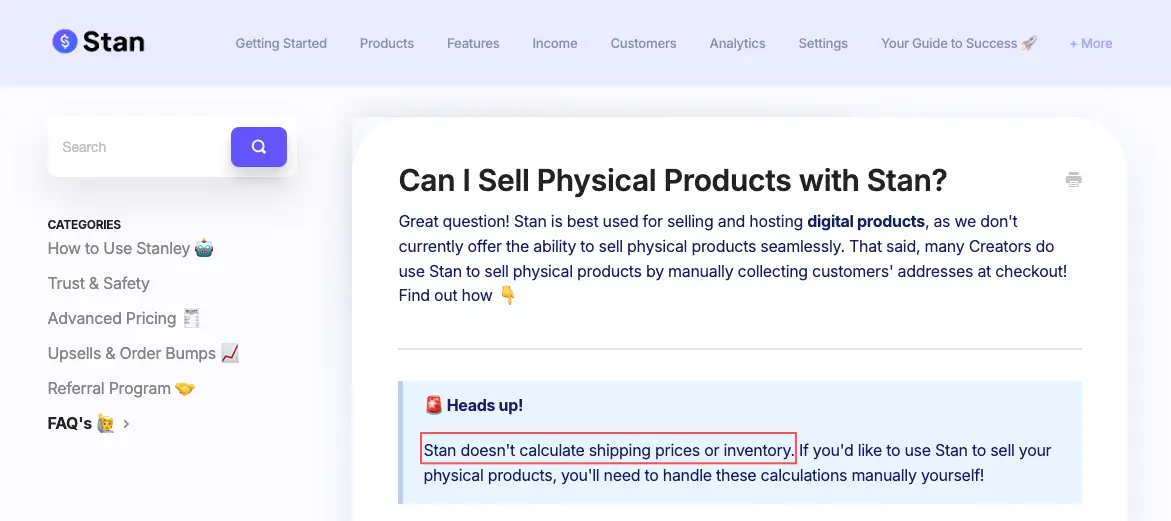
A full store. Physical products, multiple SKUs, stock that runs out, shipping zones, sales tax across regions. The moment any of that is true, you've stepped into Shopify's territory. Stan straight-up doesn't handle inventory or shipping math — and that's not a knock. It's just not what the tool is for.
So before you compare tools, name your bucket. The Stan Store vs Shopify answer tends to fall right out of that, not the other way around.
Where a product offer page fits
There's a step that lives before checkout, and most creators sail right past it.
Between "I have an offer" and "here's my checkout" sits a page doing quiet work: the part that makes someone actually want to tap buy. What the offer is. Who it's for. Why it's worth it. The one thing they should do next.
Stan folds that into its own product and checkout flow, which is genuinely handy. But sometimes the offer needs to do its job out in the open first: in an ad, in your stories, on a QR code at an event, pointing people toward the thing and catching the ones who aren't ready to pay yet but will be.
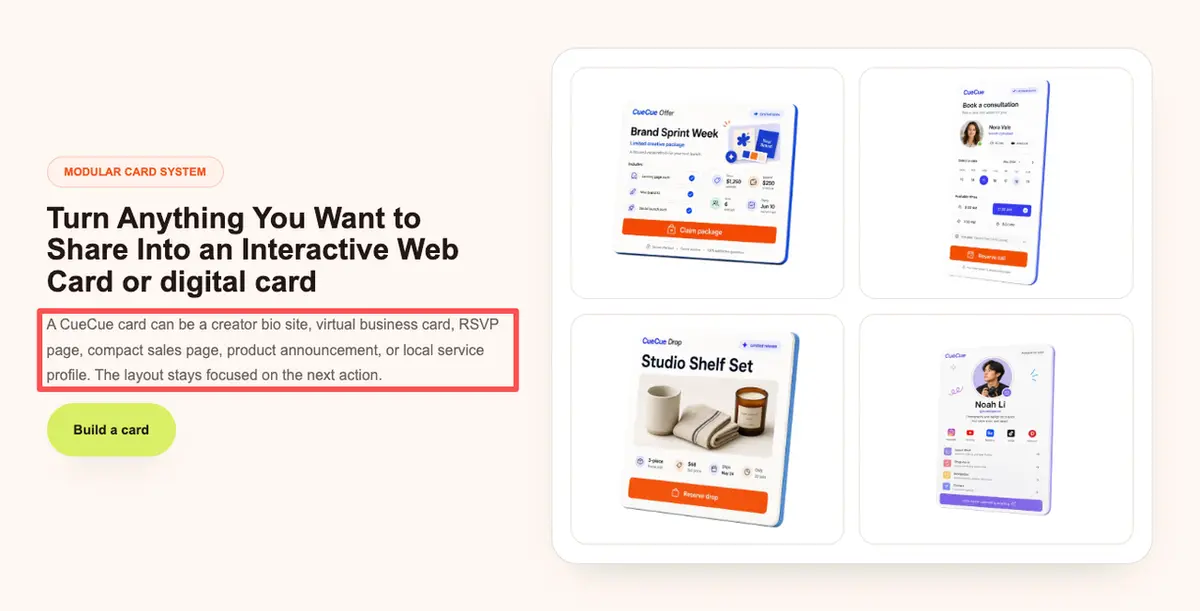
That's the slot a standalone offer page fills. Call it a product landing page if you like — same idea, the page that warms someone up before any checkout does its part. As an example, mine lives on a CueCue card: the offer up top, a short "what you get," and a single button to book a call, join the waitlist, or grab the freebie. It isn't a store, and it isn't pretending to be one. No full website needed. It just makes sure the share turns into a next step instead of a dead end.
If your "buy" link currently dumps people onto a wall of options, fix that one page before you argue about platforms.
When sellers need ecommerce infrastructure
There's a real line where Stan stops being enough, and forcing it past that line just creates pain for everyone.You've crossed into needing Shopify-style infrastructure when:
- You're selling physical products and stock can actually run out.
- You need shipping rates, zones, or labels calculated for you.
- Sales tax across regions is now your problem, not a someday-problem.
- You've got variants (sizes, colors, bundles) that each need their own stock count.
- You want in-person and online selling tied to a single inventory.
Shopify's entire job is that operational layer. Its help center walks through inventory, fulfillment, and point-of-sale, and its tax setup handles the regional rules that quietly turn into liabilities. That's serious machinery. It's also more to set up, more to maintain, and more than a creator selling one digital guide will ever need to touch.
The mistake I see most? People build the warehouse before they've sold a single thing. If you don't have inventory yet, you might not have a Shopify problem yet.
One in-between note, because I know someone's going to ask. You can push a physical item through Stan by collecting addresses at checkout and fulfilling it yourself, but you're doing the shipping and stock tracking by hand. Fine for a one-off merch drop. Painful the moment it becomes a real product line.
Scenario-based decision guide
Real situations, because "it depends" helps nobody.
You're a coach with one signature program. Stan. You're selling access and time, not boxes. Set it up, share the link, move on.
You're testing whether a digital template even sells. Start smaller than Stan, honestly. A single offer page pointing at a pre-order or a waitlist, and you wire up checkout only once people raise their hands.
You're a creator dropping a digital product to an audience that already trusts you. Stan, comfortably. That social-native checkout is the whole point.
You're launching a physical line with real stock and shipping. Shopify. Don't fight it.
You run ads to a cold audience and need a focused spot before the sale. Lead with an offer page that does one job, then send the warm ones to whichever checkout fits: Stan if it's digital, Shopify if there's a real catalog behind it.
Most creators reading a Stan Store vs Shopify comparison sit somewhere in the first three. If that's you, the heavy store can wait.
Pick the page first
If you only do one thing after reading this, make it this: put your offer on a single page (the promise, what's included, one button) and share it where your audience already hangs out. Sell from that page. Once it's actually moving, then settle the Stan Store vs Shopify question for real. The store can wait for proof.
FAQ
What is the difference between Stan Store and Shopify?
Scope, mostly. Stan is a link-in-bio storefront for digital offers, things like products, courses, coaching, and memberships, all bought without you running a website at all. Shopify is the full ecommerce platform: catalogs, inventory, shipping, tax, the whole operation. Stan suits a digital offer you want people to grab fast. If you've got stock to track and parcels to ship, that points to Shopify. Both ship updates often, so check each platform's own docs for the current details.
How should creators present a small offer?
Lead with the outcome, not the file. Say who it's for, what they walk away with, and the one next action: buy, book, or join. Keep the whole thing to a single screen and build it phone-first, because nobody's pinch-zooming your launch. And the offer page itself counts for more here than whatever platform sits under it.
What should a creator offer page include before checkout?
Enough to earn the tap, and not much more. A clear promise up top, a short "what's included," one or two proof points if you've got them, and exactly one call to action. Stan's own digital-product setup follows that same skeleton — banner, description, one button. If your page has five competing buttons, that's the first thing to cut.
How can creators test a small offer before building a store?
Put up the offer page first, send a little traffic, and watch what comes back — clicks, signups, pre-orders, replies. Whenever the interest is clearly real, then you build out checkout or a store. Standing up Shopify for an untested idea is a stack of weekends you might not get back. Start with the page, and let the response tell you what to build next.
About this content
- Written by
- Mia Anderson, UGC Creator · Content Creator
- Reviewed by
- CueCue Team, Editorial review desk
- Last updated
- June 13, 2026
- Editorial standard
- CueCue articles are written for practical use, checked for clear sourcing, and updated when product or policy details change.