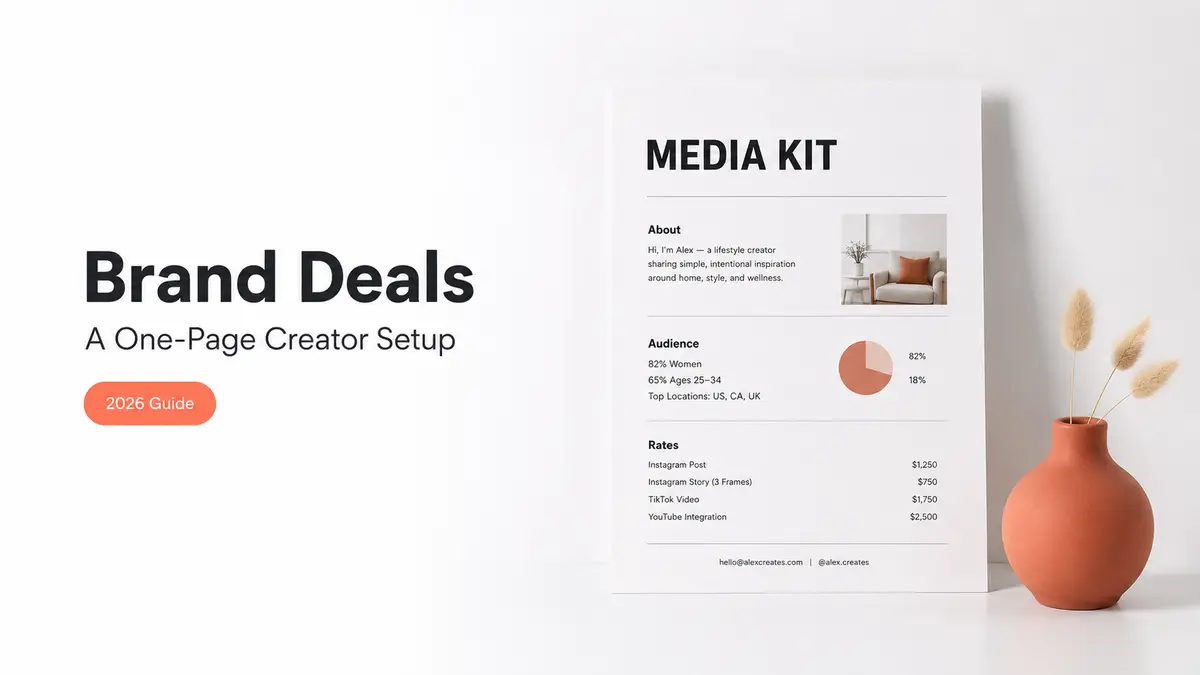
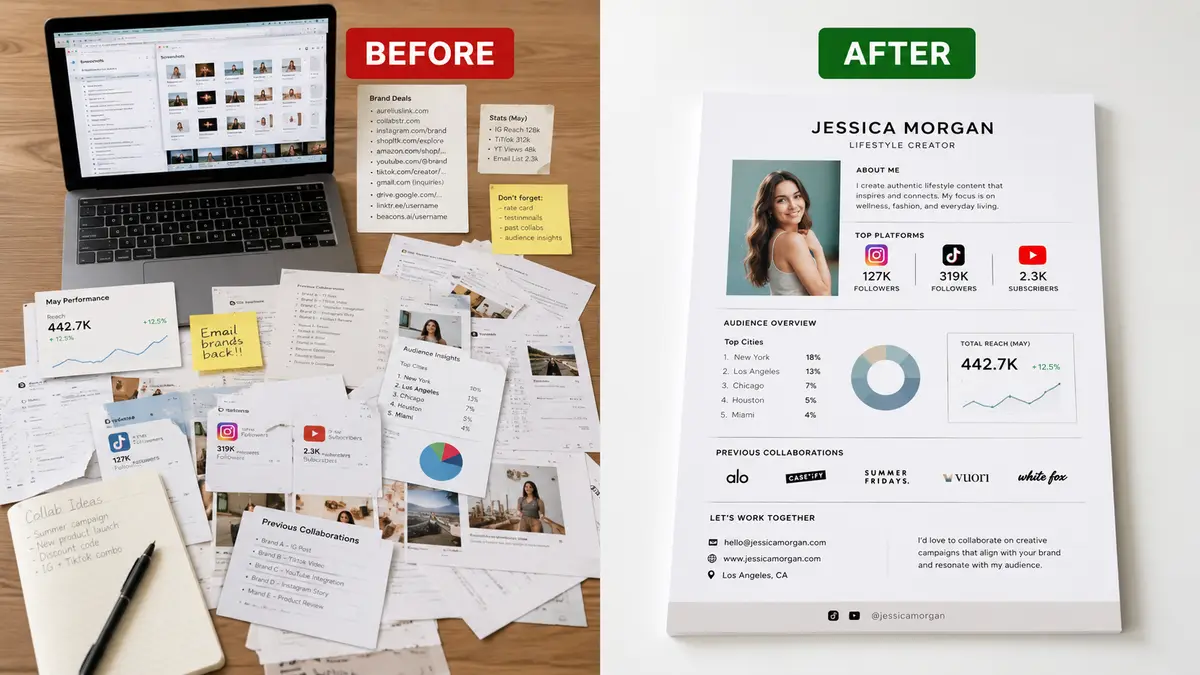
A skincare brand DM'd me back in my second year and asked one question: "Do you have a media kit?" I froze. Most brand deals for content creators start with a small, quiet test exactly like that, a brand checking whether you're ready before they ever bring up money or a contract. What I had was a camera roll. Forty screenshots of view counts. A handful of saved comments. A half-finished Canva doc I'd never even exported. I spent that whole evening stitching something together, sent it off the next morning, and then nothing came back. The deal didn't die because my content was bad. It died because I made a busy brand manager wait and squint.
That night is why this post exists. By the end you'll know how to set up one simple page that does the convincing for you, so the next time someone asks "do you have a media kit?" you fire back a link in ten seconds instead of spiraling.
Short version
Brand deals for content creators tend to kick off the same way. A brand stumbles onto you, gets curious, and wants proof fast. Your job is to have that proof sitting on one page they can open in a tap.
Three things belong on it: a few samples of your best work, a quick read on who your audience is, and an obvious way to reach you. That's it.
If you do one thing today, gather your three strongest pieces of content in one place. The page can come after.
What brands need to see before reaching out
I used to think brands judged followers first. A few deals in, I figured out what they're actually scanning for, and it's pretty practical: can this person make the content we need, for the people we're trying to reach, without turning it into a headache.
So before a brand ever sends that first message, they're after a quick answer to three quiet questions. What does your work actually look like? Who's watching it? And how do I contact you without digging?
Notice that none of them is "how many followers." A creator with 9,000 followers, sharp samples, and a clear niche will often beat someone bigger and blurrier. Brands are buying fit and reliability here, not raw reach.
Your move here: look at your current setup and ask whether a stranger could answer those three questions in under thirty seconds. If not, that's the gap to close.
Build a one-page brand inquiry flow
You don't need a website for this. What you need is one focused brand inquiry page, something that walks a curious brand from "interesting" all the way to "let's talk" without making them click away.
Samples, fit, and contact path
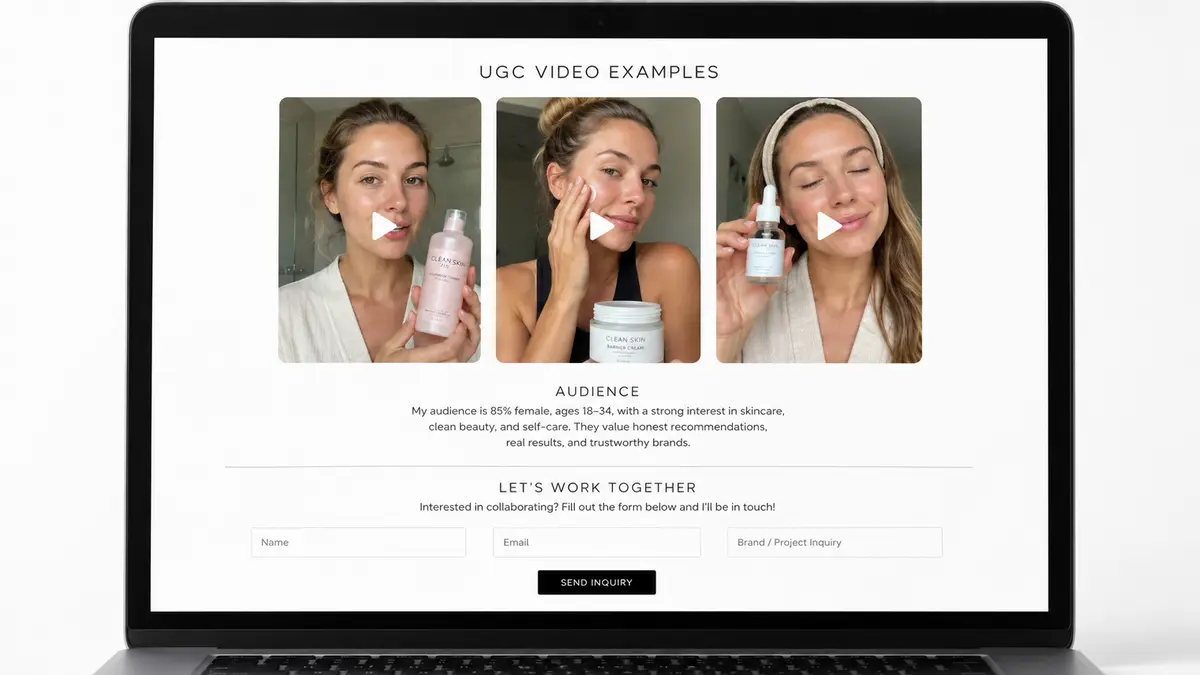
Samples first. Lead with three to five of your strongest pieces. Not everything, your best. This is your creator portfolio pulling the weight, so choose work that lines up with the deals you actually want. Doing UGC? Show the product-in-hand clips, and leave the vacation reel out of it.
Then the fit. A few honest lines about who follows you and why. The niche, the vibe, the kind of people who buy because you said so. You're not bragging about size. You're helping a brand picture their product in your hands.
Then the contact path. This is where most creators leak deals. Put a short inquiry form right on the page. Ask for the brand, the campaign, and the timeline, then stop. The Nielsen Norman Group's web form research is blunt about it: every extra field you add, the fewer people finish. A brand manager juggling ten creators will not fill out your fifteen-question intake.
Stack those three blocks, top to bottom, and you've got a working flow. Samples pull them in. Fit builds trust. The form catches the lead while they're warm. One page. One job.
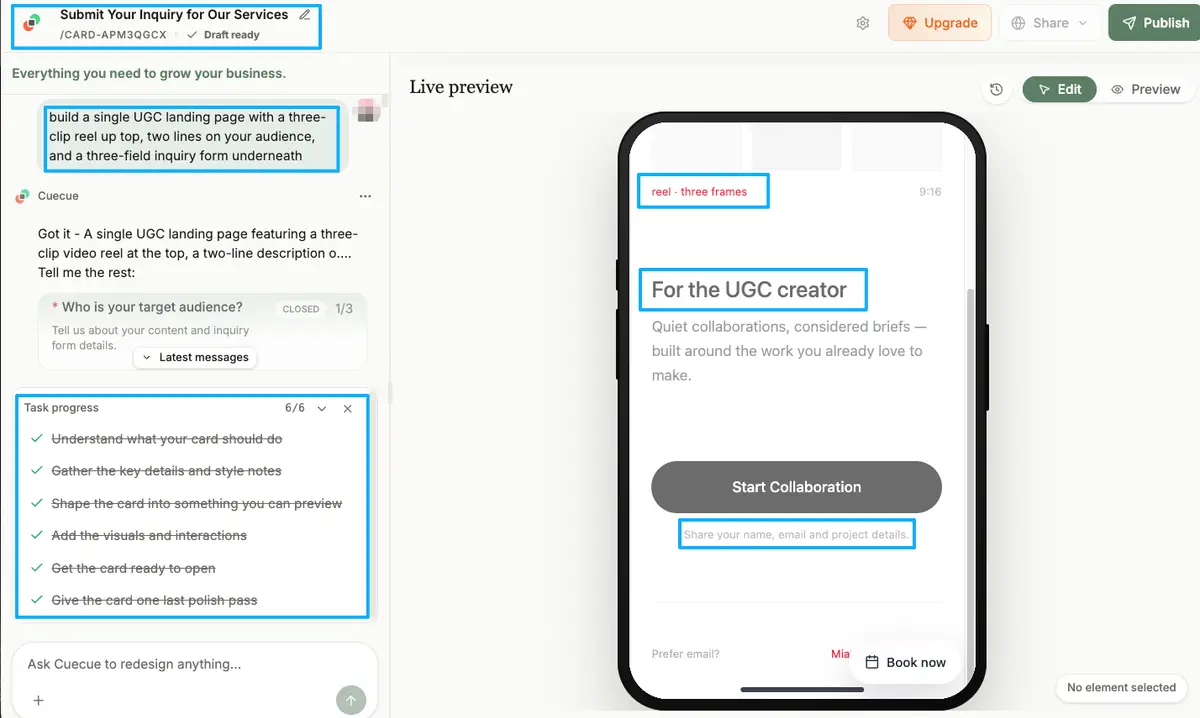
Here's an example you could build: a single UGC landing page (a tool like CueCue is one way to do it) with a three-clip reel up top, two lines on your audience, and a three-field inquiry form underneath. A brand taps, watches, gets it, and reaches out without ever leaving the page.
Where to share the page
A page nobody sees can't catch a deal. Once it's built, put the link where brands already look for you.
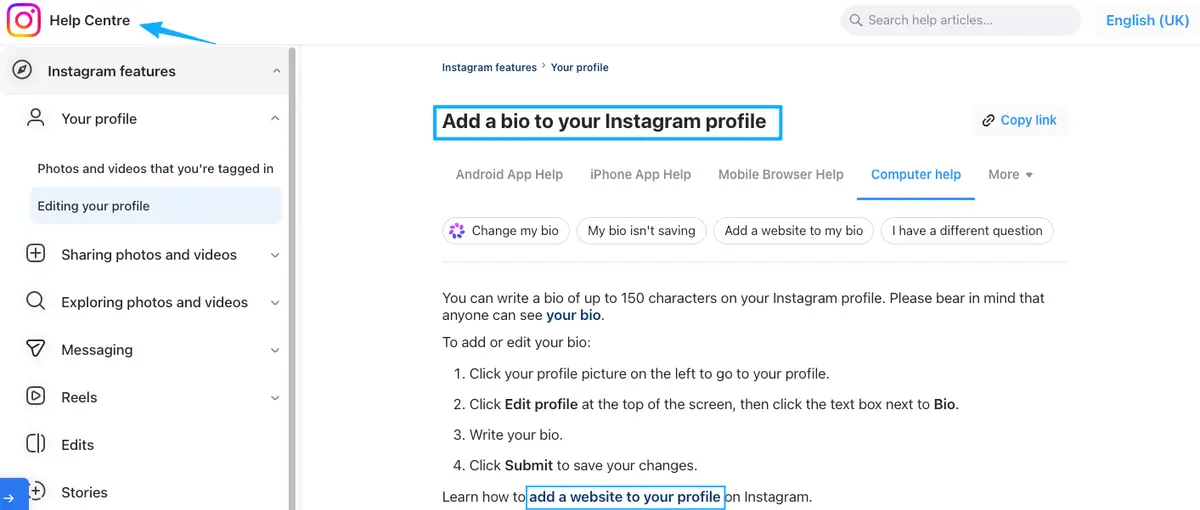
Your social bio is the obvious first home. On Instagram, drop it in the link in your profile so anyone scouting your account lands straight on your samples. Same idea on TikTok and YouTube.
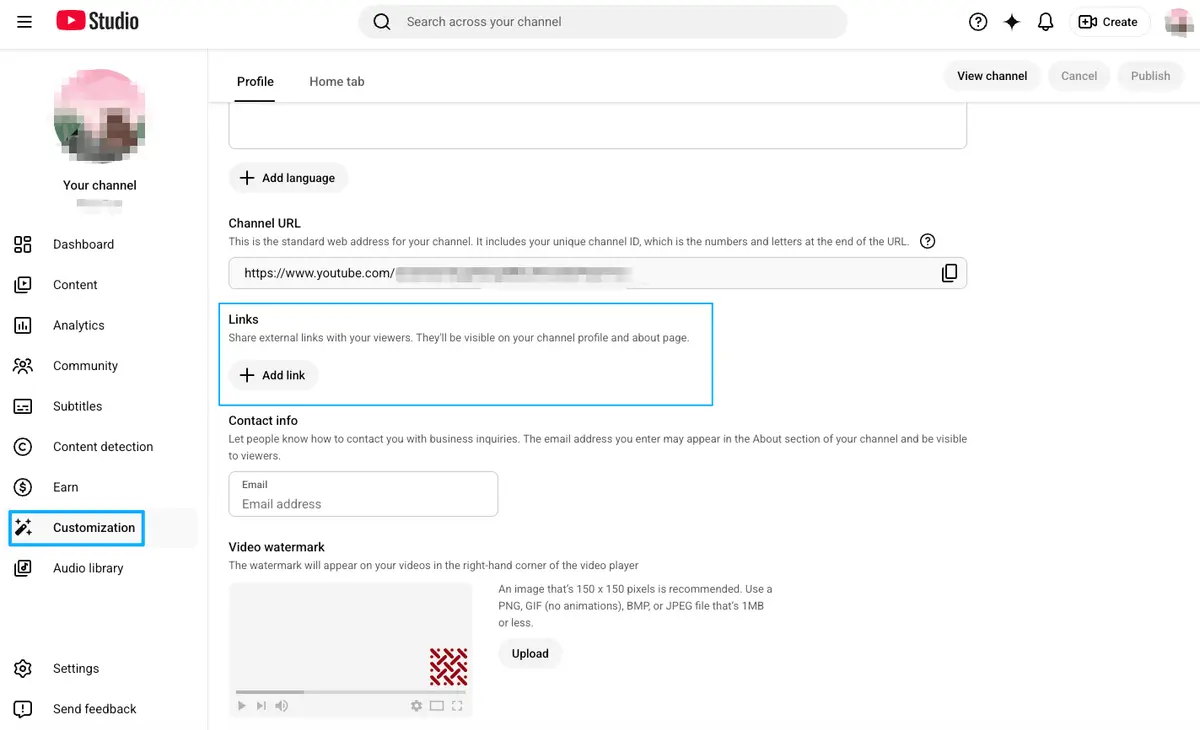
But don't stop at bios. Paste the link in your email signature, so every reply you send doubles as a soft pitch. Add it to the end of cold pitch emails. Keep it one tap away in your DMs, ready for the next brand that asks. The whole point of one link is that you never scramble again.
Quick action: update your bio link today, then add the same URL to your email signature. Two places, five minutes.
Mistakes that make brand deals harder
I've made all of these, so learn them on my dime. Most stalled brand deals for content creators trace back to one of the three below.
The first is the scavenger hunt. Samples on one platform, rates in a Google Doc, contact buried three taps deep. Every extra step is a chance for a busy brand to give up. Pull it into one place.
The second is the everything page. Some creators try to show every clip, every platform, every service. It reads as noise, and the brand can't tell what you're great at. Curate hard. Three strong samples beat thirty average ones.
The third is looking like you'll cut corners on disclosure. Serious brands care about compliance. If your account hints that you'd hide a paid partnership, that's a red flag for them, not a selling point. When you do land deals, you disclose them, and the FTC's guidance for influencers is the source to follow, since the rules get updated. Looking trustworthy is part of the pitch.
Fix all three by being clear and honest: one page, your best work, an easy yes.
What not to include
A brand inquiry page works because of what you leave off, as much as what you put on.
Skip the public rate card. Pricing depends on the deal, the usage, the exclusivity, and locking a number in public usually works against you. Let the conversation set the price. Invite the inquiry instead.
Skip the inflated numbers. Don't round your reach up or pad your engagement. Brands check, and a stretched stat ends a relationship before it starts. Real and modest beats impressive and fake.
Skip the wall of links. Your portfolio site, your other socials, the podcast, the newsletter. On a brand inquiry page, each extra link is just one more exit before they hit the form, and the research on choice overload backs this up: pile on options and people slow right down. Strip it to the path that ends in contact.
The rule underneath all of it: if something doesn't help a brand decide to message you, it's clutter. Cut it.
You're closer than the camera roll made you feel
You already do the part that's actually hard. You make content brands want to borrow your trust for. The setup is the easy half, and right now it's the thing standing between you and the next yes.
So pull your three best pieces into one place this week, add a short way for brands to reach you, and share that link where they're already looking. Turn every share into an action. Build the one page that finally answers "do you have a media kit?" with a single link, and let that old camera roll of screenshots rest for good.
FAQ
What do creators need for brand deals?
Less than you'd think. A handful of strong content samples, a clear sense of who your audience is, and an easy way for a brand to reach you. You don't need a big following or a full website. You need that proof gathered in one place a brand can open fast, instead of scattered across screenshots and docs.
How do creators collect brand inquiries?
Put a short form where brands already land, like your bio link or a dedicated inquiry page. Ask for the essentials only: brand, campaign, timeline. Then make sure those responses reach an inbox you actually watch. The quicker you reply, the more real the deal feels. Speed signals that you're someone easy to work with.
When should creators use a media kit page?
The moment a brand might ask "do you have a media kit?" and you'd hesitate. A creator media kit page is worth setting up before you need it, not during the panic. If you're actively pitching or getting inbound interest, having one ready turns a scramble into a single link you send without thinking.
What should creators avoid on a brand inquiry page?
Public rates, padded numbers, and clutter. Avoid anything that asks a brand to do extra work or that you can't back up. For how to handle disclosure once a partnership is live, follow the current official FTC guidance rather than guessing, since those rules change over time.
About this content
- Written by
- Mia Anderson, UGC Creator · Content Creator
- Reviewed by
- CueCue Team, Editorial review desk
- Last updated
- June 15, 2026
- Editorial standard
- CueCue articles are written for practical use, checked for clear sourcing, and updated when product or policy details change.