
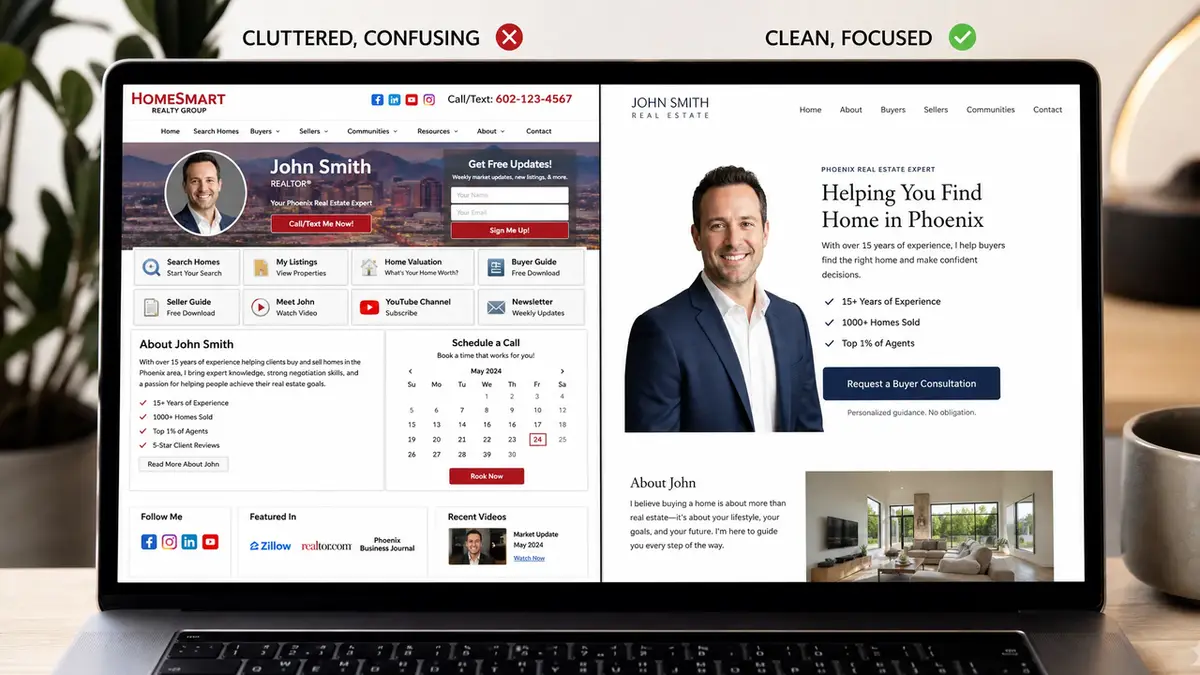
My first bio page had seven buttons. YouTube, an old newsletter, two portfolio links, a dead calendar, and still no clear way to ask about working with me.
Busy page. Quiet inbox.
That mistake changed how I think about how to write a real estate bio. The bio has one job before the click: give a prospect enough reason to trust the next step. The page after the click has another job. It collects the inquiry, books the conversation, or guides the visitor to the right service.
Keeping those jobs separate makes the writing much easier.
How to write a real estate bio for the inquiry you want
Do not begin with your childhood, your awards, or a list of every neighborhood within driving distance.
Begin with the inquiry.
Think about who you actually want hearing from you this month. Someone comparing two suburbs as a first-time buyer isn't going to reach out for the same reason as a homeowner mulling over a spring listing. Start with one audience. Then ask yourself — once they've read this, what do you actually want them to do?
Make the action specific:
- Request a buyer consultation
- Ask for a seller planning call
- View current listings
- Send a relocation question
One action is enough.
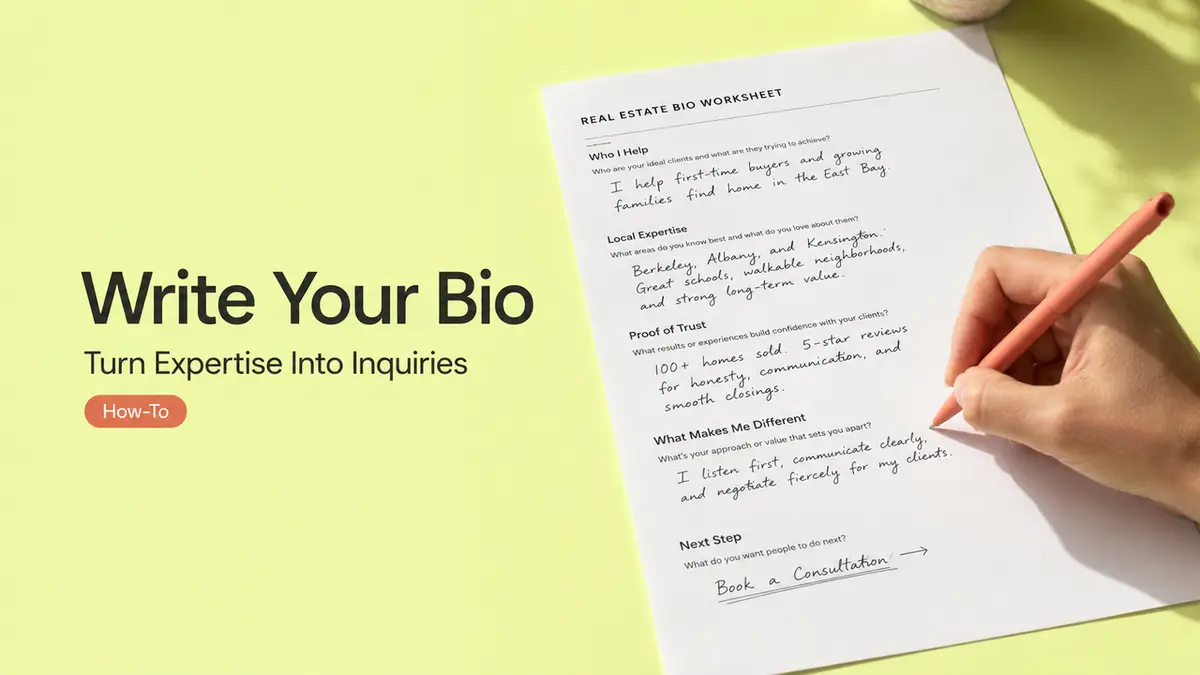
Your opening lines should support that action by answering three practical questions: who you help, where you work, and what kind of guidance you provide.
The broader real estate bio guide can help with page placement and supporting sections, but the writing process should still start with the desired inquiry.
Try this working sentence:
I help [client type] navigate [specific move or market] in [service area], with a focus on [credible working approach].
It is a draft, not a slogan carved in marble. Make it true first. Polish it later.
Choose the right bio angle
A bio angle is the reason someone should keep reading.
Go with whatever fact you can actually back up right now, not the version of yourself that sounds most impressive on paper. The angle can always shift later as you build experience.
Local expert
“Local expert” carries weight, so use it carefully. Specific knowledge is more persuasive than a broad label anyway.
Name the area you genuinely serve. From there, get into what that familiarity actually tells someone. Commute patterns. The kind of housing stock you'll find. Whether new construction is picking up or stalled. What it's really like, logistically, moving between one community and the next nearby.
A grounded version might sound like this:
Based in [area], I work with buyers and sellers who want practical guidance on the neighborhoods, property types, and moving decisions that shape this part of the market.
Living locally can support familiarity. It does not automatically prove sales volume, pricing accuracy, or leadership in that market.
When the label feels too large for the proof behind it, use “local focus” instead.
First-time buyer guide
First-time buyers are often looking for someone who can make the process feel legible.
Show how you communicate. You might mention explaining the sequence before showings begin, helping clients prepare questions for lenders and inspectors, or keeping decisions organized as new information arrives.
Keep professional boundaries visible. An agent can walk clients through the process and explain how it works, but shouldn't come across as offering legal, lending, inspection, or tax advice — not unless that's a separate qualification they actually hold.
A short positioning line could be:
I work with first-time buyers in [area], helping them understand the next step, prepare better questions, and move through the process without being rushed.
Calm beats grand.
Listing specialist
Use “listing specialist” only when your training and experience make the phrase supportable. Earlier in your career, “seller-focused agent” or “building my practice around residential listings” may be more accurate.
Talk about the work you can honestly perform: preparing a timeline, explaining the brokerage’s listing process, coordinating approved marketing materials, and keeping communication clear.
Do not borrow your team’s total production and present it as your own. If you mention team results, label the team, time period, geography, and your actual role.
Need wording rather than process? The real estate bio examples for new agents shows how different trust signals can be expressed without inventing proof.
How to write a real estate bio around proof and next action
Once the angle is clear, build each claim on evidence.
Proof can be modest. An active license, brokerage affiliation, a legitimate designation, relevant career experience, language ability, community involvement, or firsthand knowledge of a service area may all help.
State exactly what each fact demonstrates.
Then cut the fog.
“Dedicated to excellence” says very little. “Previously managed construction schedules for five years and now brings that organized communication style to residential clients” gives the reader something concrete, provided the claim is accurate.
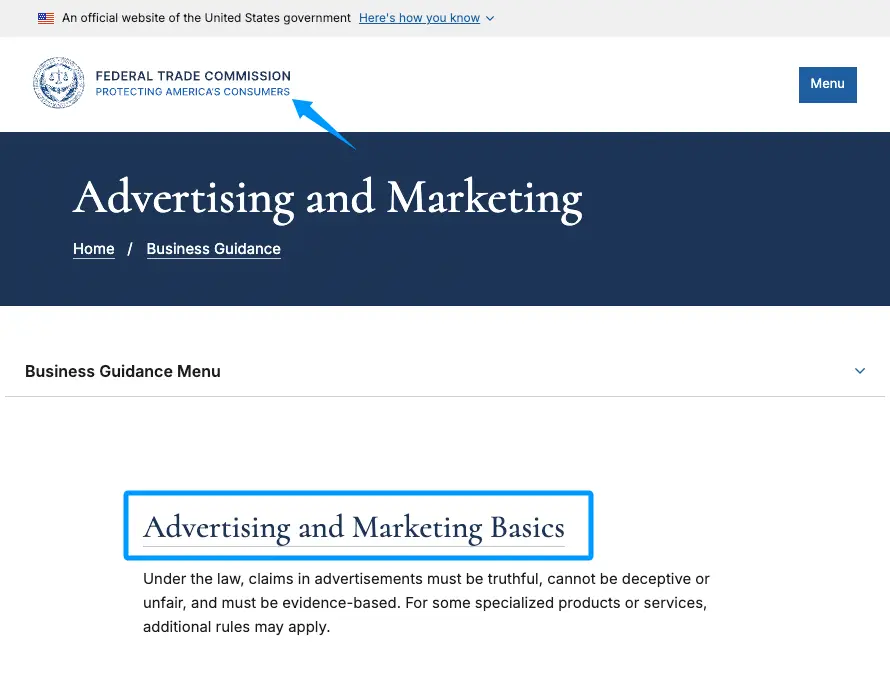
The FTC's position is straightforward — advertising claims need to be truthful, not misleading, and backed by evidence. That matters a lot once a bio starts making objective claims about rankings, results, experience, or performance. Review the FTC’s advertising guidance for businesses before publishing claims you cannot support.
Agents who are REALTORS® should also consider Article 12 of the 2026 NAR Code of Ethics, which requires honesty and a true picture in real estate communications, advertising, and marketing. Your brokerage, state commission, local association, and MLS may add requirements for brokerage identification, license information, team names, listings, and disclosures. Read the 2026 NAR Code of Ethics and Standards of Practice.
Housing language needs care too. Under the federal Fair Housing Act, housing discrimination based on race, color, national origin, religion, sex, familial status, or disability is prohibited — and depending on where you work, state or local protections can go even further. Avoid bio language that signals a preference for a protected group or describes who “belongs” in a neighborhood. Review HUD’s Fair Housing Act overview.
Just keep in mind — this is general guidance, not legal advice specific to your state. If anything feels uncertain, run it by your broker or compliance contact before it goes live.
Finish the bio with one next action that matches the opening. If you began with first-time buyers, do not end with three equal buttons for buying, selling, recruiting, and newsletter signup.
Close the loop.
Connect the bio to a lead capture page
The bio and the action page are partners, but they do different work.
The bio answers:
Why should I trust this agent enough to continue?
The lead capture page answers:
What can I do now, and what information should I share?
Keep the handoff consistent. Repeat your name, brokerage, service area, and primary offer. Then ask for only the fields needed for the next conversation.
A buyer inquiry might request:
- Name
- Preferred contact method
- Target area
- Approximate timeline
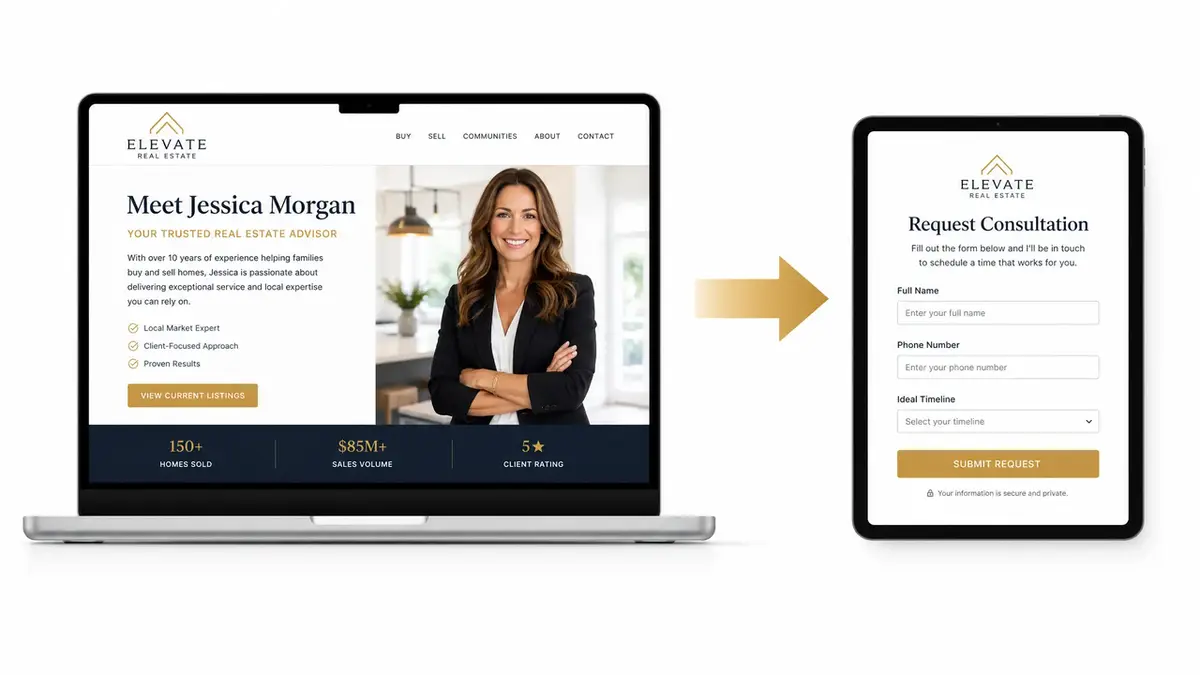
A seller inquiry may also need the property address.
Sensitive financial details do not belong in a casual contact form. Follow brokerage-approved systems and data-handling procedures.
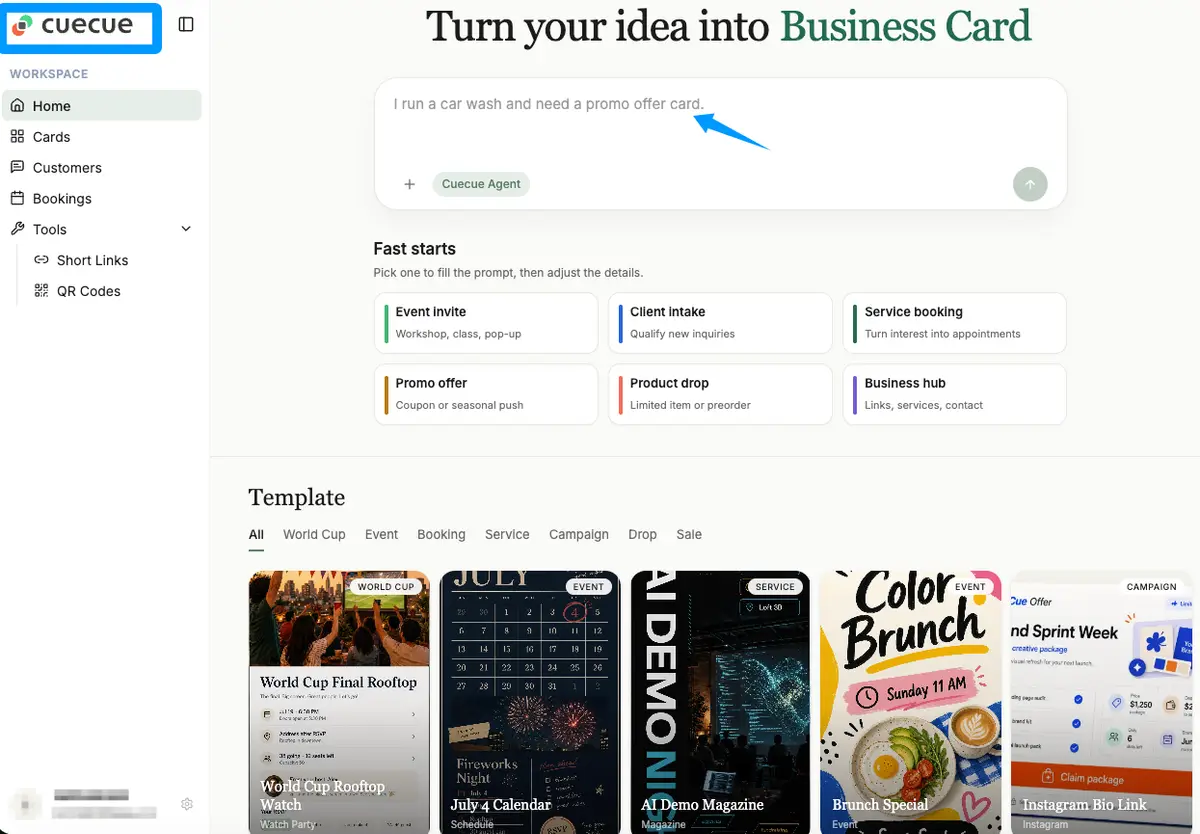
CueCue can be the publishing layer for this handoff. Its official digital business card page describes real estate cards with an agent profile, listings link, phone contact, QR sharing, booking, and a focused follow-up action. CueCue’s main site also lists forms and lead-capture modules. See CueCue’s digital business card workflow.
That does not mean every module belongs on the page.
Put the primary action near the top. Add supporting proof below it. Stick to listings you're actually authorized to advertise, and don't skip your brokerage, MLS, attribution, copyright, and local advertising rules along the way.
The bio creates readiness. The action page receives it.
Figuring out how to write a real estate bio gets a lot easier once you know what's supposed to happen after that last sentence. Choose your inquiry first, support one clear angle with honest proof, and send the reader to one matching action.
Your move today: write the single CTA your ideal prospect should see after reading your bio.
FAQ
How long should a real estate bio be?
For most profile pages, somewhere around 150 to 300 words is plenty to cover your audience, service area, proof, working style, and CTA.
A shorter social bio may need one positioning line and one action.
Use the space the placement gives you. Do not stretch a thin claim into a long paragraph.
Can agents write bios in first person?
Yes. First person often feels direct and natural on a personal site or lead capture page.
Third person works fine for a brokerage directory, a media kit, or a team page. Just pick one voice and stick with it — across the bio, the CTA, and the inquiry page.
What should agents avoid claiming in a bio?
Avoid unsupported rankings, production totals, awards, testimonials, specialist labels, and guarantees. Do not present team achievements as personal results or imply qualifications you do not hold.
Also review brokerage rules, applicable advertising requirements, MLS policies, and fair housing guidance before publishing.
If a claim starts feeling vague, swap it for something smaller you can actually verify.
About this content
- Written by
- Mia Anderson, UGC Creator · Content Creator
- Reviewed by
- CueCue Team, Editorial review desk
- Last updated
- June 30, 2026
- Editorial standard
- CueCue articles are written for practical use, checked for clear sourcing, and updated when product or policy details change.